

Dress Rehearsal Defined: Dictionary Meaning and a 7 Step Checklist
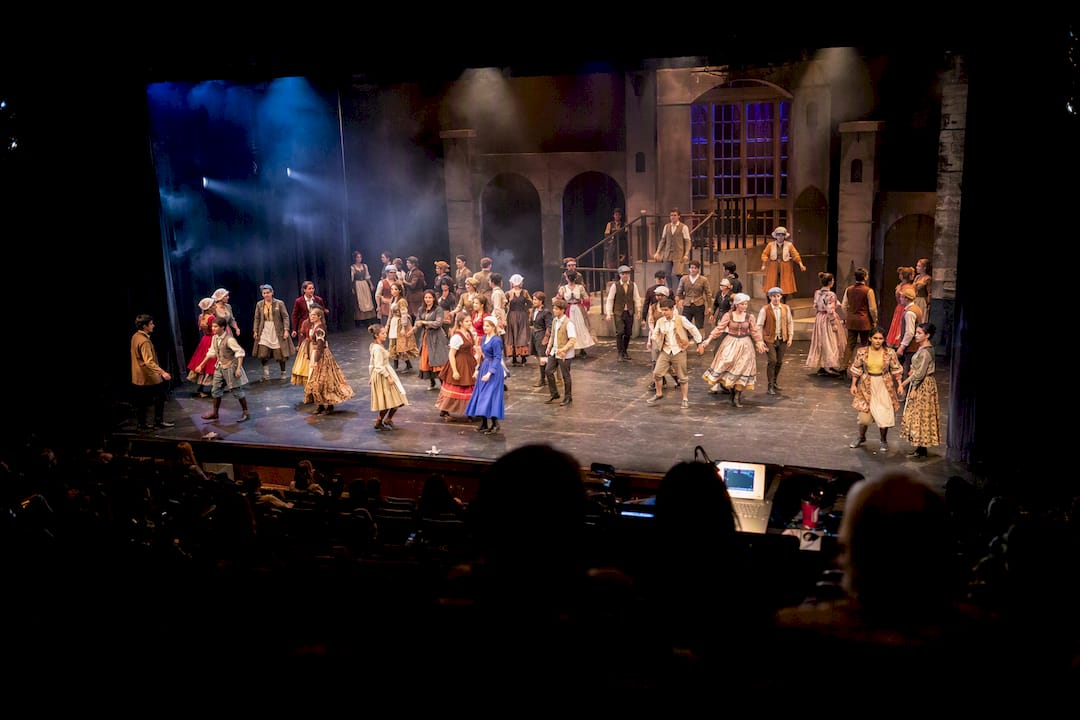
A dress rehearsal is the final full run of a show performed in complete costume, with every lighting cue, sound effect, prop and scene change in place, held in the last days before the first public performance. It functions as a dress-down, no-stopping simulation of opening night, letting the whole company catch practical problems while there is still time to fix them.
TL;DR:
A dress rehearsal is the final, complete run of a show with all costumes, scenery, and technical cues in place, intended for practical troubleshooting.
It occurs at the end of tech week or immediately afterward, usually within days of the opening night, and often includes a preview performance.
During the rehearsal, every costume change, prop, lighting cue, and scene change is executed as in the real performance to identify issues early.
A successful dress rehearsal relies heavily on detailed cue logging by the stage manager, with minor fixes like prop relabeling and costume adjustments common.
A rough dress rehearsal is more valuable than a smooth one, as it indicates issues are still being surfaced and fixed before the public debut.
Table of Contents
What a dress rehearsal actually is
The Cambridge Dictionary defines it plainly: the last complete rehearsal using costumes, scenery and lighting exactly as they will appear for the first performance. That definition matters because it draws a hard line under “complete.” Nothing is skipped, marked through, or simplified. Everyone treats the room as though the audience is already in their seats.
The goal is not polish. It is practical troubleshooting — finding out whether a costume restricts a dance break, whether a prop rattles when it shouldn’t, whether a door slams loud enough to trip a live microphone. You want the answer to be yes, tonight, not on opening night.
Who is in the room? Everyone. The full cast, the band or orchestra if there is one, the entire technical crew running lights and sound, the director watching from the house, and the stage manager holding the show together from the wings. This is the one rehearsal where every department that will exist during a live performance is present and working at once.
What happens during a dress rehearsal
A dress rehearsal moves through the same sequence a real performance would, and everyone involved is expected to treat it that way. The specifics vary by show, but most dress rehearsals cover the same ground.
Costumes and quick changes: performers wear full costume, including wigs, shoes and accessories, and practise any fast changes in real time backstage.
Props and scenery: every hand prop, set piece and scene change gets handled exactly as it will be during the run, not mimed or substituted.
Lighting and sound cues: the full lighting plot and sound design run alongside the performance, cue for cue, rather than in isolated technical blocks.
A continuous run-through: the show plays start to finish, stopping only for a genuine technical fault, not for acting notes or missed lines.
Cue logging: the stage manager tracks every cue and technical hiccup on a working script, ready to brief designers afterwards.
Pro Tip: Mark your props and costume pieces with coloured tape or a small tag before the run starts. When a quick change happens in the dark backstage, fumbling for the right shoe costs seconds you don’t have.
How a dress rehearsal differs from earlier rehearsals
Early rehearsals are about learning: lines, lyrics, choreography, blocking. Nobody expects polish yet, because the building blocks are still going in. A technical rehearsal comes next, and it is deliberately stop-start. The company pauses constantly to reset a lighting cue, adjust a sound level, or walk through a scene change until the crew has it right.
A dress rehearsal assumes that groundwork is finished. Lines are learned, cues are set, and the aim shifts to integrating everything into one continuous performance. Stopping the show is the exception, not the method. That distinction, learning versus fixing versus integrating, is the cleanest way to understand what separates the three stages.
Where the dress rehearsal sits in the schedule
Most productions follow a similar sequence: rehearsal period, then tech week, then dress rehearsal, then previews, then opening night. Tech week is the period where lighting, sound and scenic elements are layered in for the first time, and it is often preceded by a “paper tech,” a planning meeting where designers and stage management map every cue before anyone sets foot on stage.
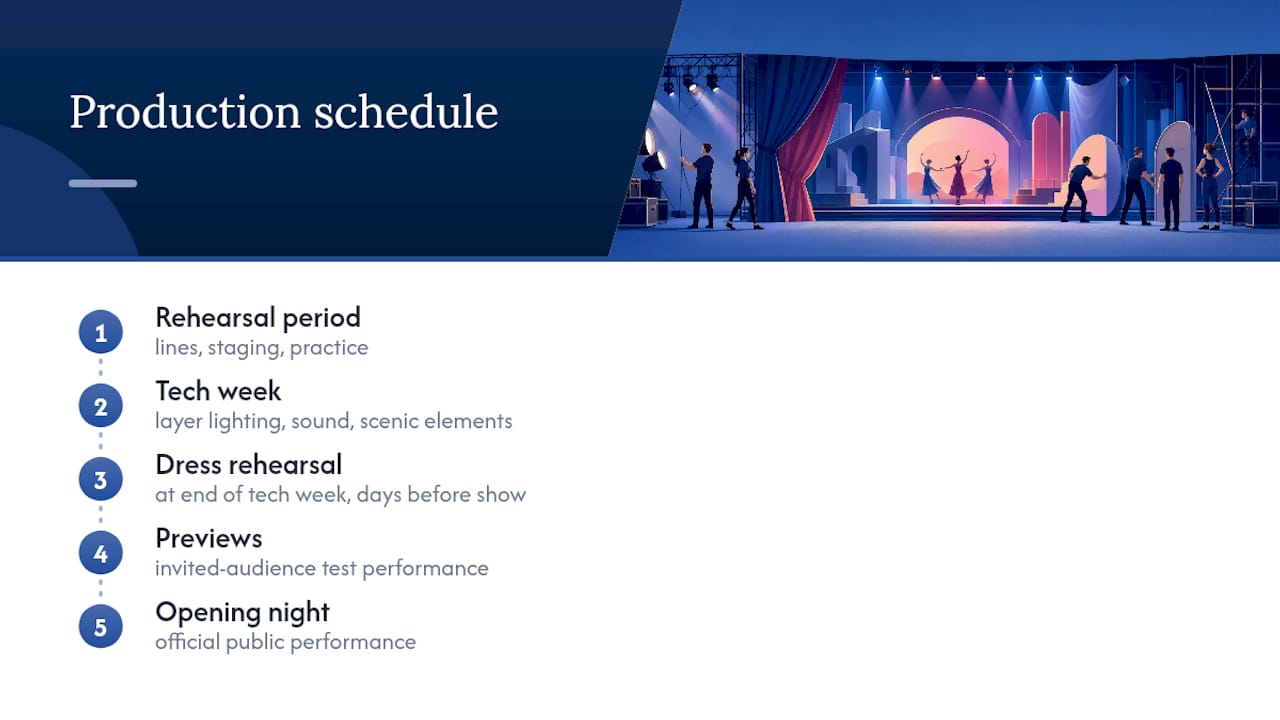
The dress rehearsal typically falls at the very end of tech week or immediately after it, usually within a few days of the first public show. Some productions add a preview performance, an invited-audience dress rehearsal used to test comic timing and emotional beats without the pressure of critics or a full house watching.
Why it’s called a “dress” rehearsal
The name comes directly from the practice it describes: performers wear their full costume, or “dress,” to simulate real performance conditions rather than working in rehearsal clothes. You will also hear it called a final run-through or a general rehearsal, and in German-speaking theatre the equivalent term is Generalprobe. Outside theatre, people borrow the phrase loosely, calling any full-scale trial run before a big event a “dress rehearsal” for the real thing.
A performer and crew checklist for dress rehearsal night
Tech week and dress rehearsal are commonly nicknamed “hell week” for good reason. Long hours, high stakes and full costume under hot lights make it the most demanding rehearsal in the whole process. Going in prepared makes a genuine difference to how it feels and how much gets fixed.
Arrive off-book, rested, and with every costume and prop item labelled and ready.
Run quick changes at least once beforehand so backstage timing isn’t a surprise.
Check your microphone and sound levels before the run starts, not during it.
Confirm your sightlines against the lighting plot, especially for any blackout entrances.
Expect stops for technical fixes and treat each one calmly rather than as a failure.
Remember the run is troubleshooting, not a performance for an audience, so a rough patch tonight is the entire point.
Pace yourself: drink water, take short rests when you’re offstage, and don’t burn out before opening night.
Pro Tip: If everything goes suspiciously smoothly, some practitioners consider that bad luck rather than a good sign. The whole point of a dress rehearsal is to surface problems while you can still fix them, so a few stumbles tonight usually means a stronger opening night.
How Oceantheatre runs a dress rehearsal
Staging two full-scale musicals a year with performers aged 14 to 19 means we at Oceantheatre have run this exact evening more times than we can count, from Guys & Dolls to Singin’ in the Rain. Every dress rehearsal brings cast, orchestra and crew into one room for the first time under full lighting and sound, exactly as tech week is meant to work.
We’ve learned that the biggest wins come from small, checkable fixes: a costume seam that catches on a set piece, a microphone pack that needs repositioning under a heavier costume, a prop table that needs relabelling once quick changes are added. None of that shows up until costumes and cues meet in the same room, which is exactly why the session exists.
For a young cast, we also treat dress rehearsal as a confidence builder rather than a test. Getting comfortable performing in full costume under real lights, before family and friends ever see it, takes real pressure off opening night. You can see the full run of productions where we’ve put this into practice on our past shows page.
Ready to experience a full production for yourself?
Reading about dress rehearsals is one thing. Watching a company of young performers pull an entire show together, costumes, cues, orchestra and all, in the final nervous days before curtain up is another entirely. A youth theatre trains performers aged 14 to 19, building full-scale musical productions a year through weekly rehearsals under professional direction.
If your teenager wants to learn what a real dress rehearsal feels like from the inside, rather than just reading the definition, explore our current production pages or head to the Oceantheatre homepage to see how our training programme works from first audition to opening night.
Why the “final run-through” framing undersells what dress rehearsal really does
Most explainers treat dress rehearsal as a box to tick, the last item before opening night. That framing misses the point. The value isn’t in rehearsing what already works. It’s in deliberately staging the one performance where failure is not just tolerated but expected, because nobody has yet worn the costume, handled the prop and heard the cue in the same three seconds.
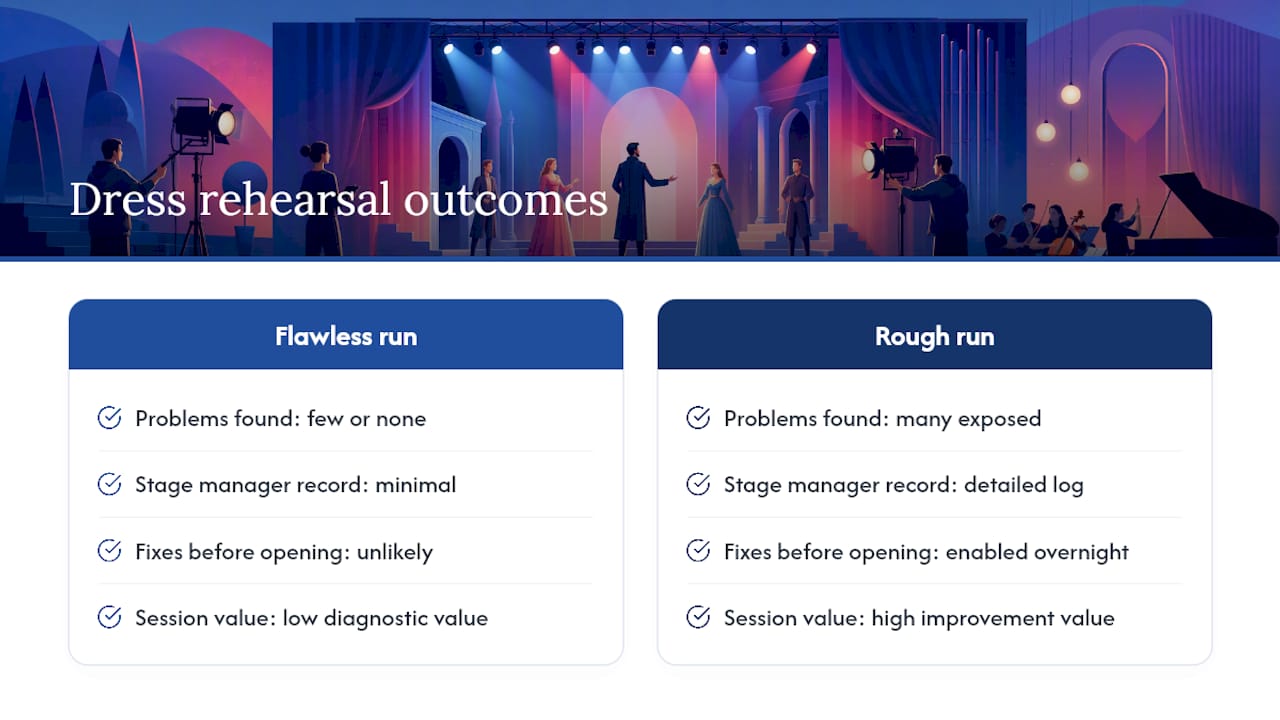
What gets underestimated is how much of that pressure falls on the stage manager rather than the performers. Actors get to be off-book and focus on the room. The stage manager still works from a full script throughout, logging every dropped cue and sticky costume change in real time, because that record is what makes the fixes possible before the audience arrives. Ignore that role and a dress rehearsal becomes a performance with no memory. Respect it and you get a production that actually improves overnight, which is the entire reason the session exists in the first place.
If there’s one thing worth correcting in how people talk about this, it’s the instinct to want a flawless dress rehearsal. A clean run tells you less than a rough one. The superstition among practitioners that a smooth dress rehearsal predicts a shaky opening night isn’t just theatre folklore. It reflects a real pattern: a dress rehearsal with no problems usually means nobody found the problems yet.
— Andrew
Sources
For more detail on the terms covered here, the Cambridge Dictionary’s entry on dress rehearsal gives the standard definition, while Grand Canyon University’s guide unpacks the practical reasoning behind it. For the wider production schedule, Wikipedia’s entry on technical week explains how tech and dress rehearsals connect, and for a look at how logistics pressure builds around any large live event, this production checklist for large-scale shows offers a useful comparison from outside theatre.
Recommended
Comments