

Beat the 90 minute energy dip: UK nutrition for performers

Plan your meals and snacks around rehearsal and performance times, and the rest follows: prioritise carbohydrate for fuel, spread protein through the day for recovery, and keep hydration steady rather than rushed. This is the essence of nutrition for performers, and it holds whether you’re singing, dancing, or holding focus through a three-hour set. BAPAM, the NHS, and the 4Ps framework all point the same way: eat real food, on a schedule that respects the stage.
TL;DR:
Most performers should consume up to 12 grams of carbohydrate per kilogram of body weight daily, depending on the intensity of their activity.
Vegetarian and vegan performers need to focus on vitamin B12 and supplement if necessary, with iron and calcium also key for physically demanding roles.
Eating a balanced meal three to four hours before performance, plus a small carbohydrate-protein snack one to two hours prior, optimizes energy without discomfort.
Hydration should be spread across the day, with a small amount of electrolyte intake only during heavy sweating or lengthy performances.
Building a stock of shelf-stable, performance-friendly snacks and foods is crucial for touring and irregular schedules to maintain consistent nutrition.
Table of Contents
What to eat: macronutrients, portion cues and performer-friendly foods
Meal timing: pre-performance, during and post-performance rules
Touring and irregular schedules: a plan and a ‘tour store cupboard’
Special considerations by performer type: singers, dancers and musicians
Supplements and medical cautions: when to test and when to use supplements
Sample daily plan and quick backstage snacks for performance days
How Ocean Theatre Company translates nutrition into rehearsal and performance routines
Author perspective: practical priorities for performers to test
What to eat: macronutrients, portion cues and performer-friendly foods
Performance nutrition isn’t a mystery once you break it into three working parts: carbohydrate for fuel, protein for repair, and fat plus micronutrients for everything running in the background. A Frontiers in Nutrition review puts carbohydrate needs at roughly 3 to 12 grams per kilogram of body mass daily, depending on how physically demanding your schedule is. A dancer running eight hours of rehearsal sits at the higher end; an actor doing mostly line-work and blocking sits lower.
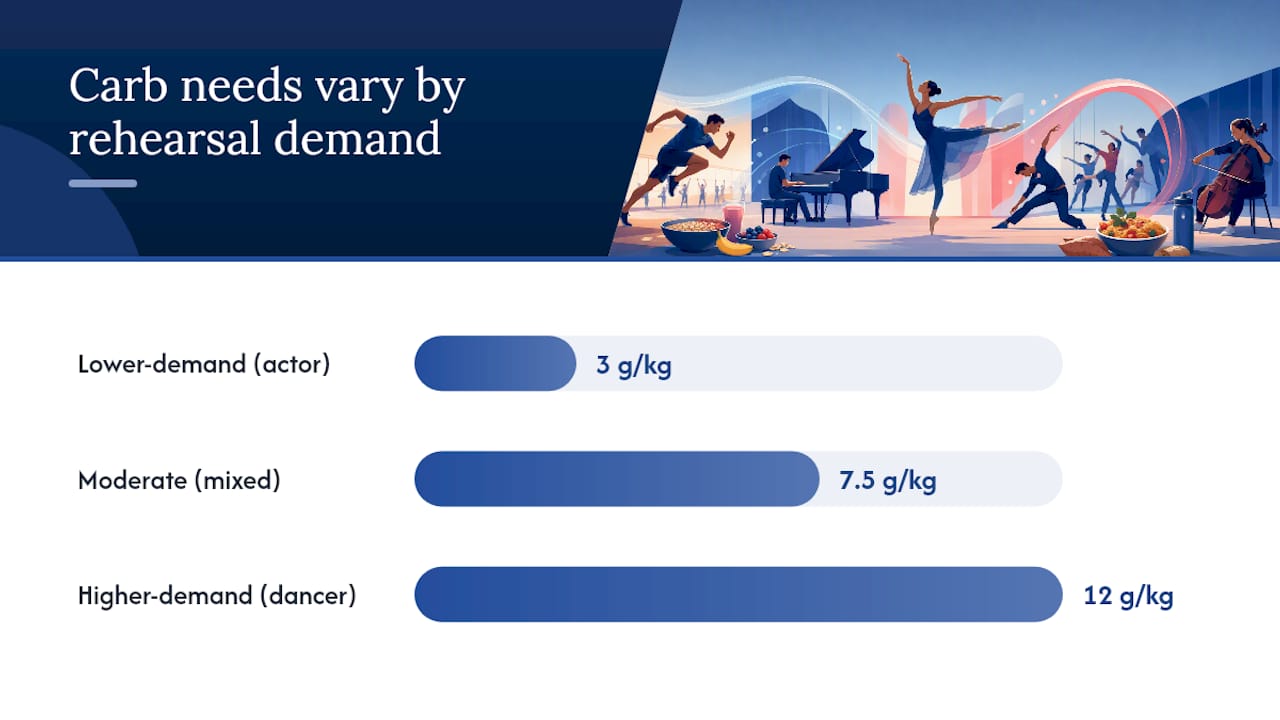
Protein matters just as much, particularly for dancers and physically active performers repairing muscle after repeated takes or routines. The same review places protein needs vary depending on training goals, spread across three or four meals rather than loaded into one. Vegetarian and vegan performers can hit these targets with lentils, tofu, tempeh, and fortified plant milks, though the NHS flags vitamin B12 supplementation for vegans as a near-universal need on that diet.
Fat should sit around 20 to 35% of daily energy, mostly from oily fish, nuts, seeds, and olive oil rather than fried or heavily processed sources. Three micronutrients deserve special attention for performers: vitamin D, iron, and calcium. BAPAM names all three as priority nutrients, and vitamin D deserves a UK-specific note: with limited sunlight from October to March, many performers benefit from a supplement rather than relying on diet alone.
Practical, portable combinations that tick these boxes:
Porridge oats with milk, banana, and a spoon of peanut butter
Wholemeal pitta with hummus, grilled chicken or falafel, and salad
Greek yoghurt with berries and a handful of almonds
Jacket potato with tuna or beans and a side of vegetables
Wholegrain toast with scrambled eggs or mashed avocado
None of these require a kitchen or a chef. They’re the kind of thing you can build in a dressing room with a kettle and a fridge.
Meal timing: pre-performance, during and post-performance rules
Timing determines whether that carbohydrate and protein actually help you on stage or sit as a stone in your stomach. The 4Ps framework gives a clear sequence worth memorising.
Three to four hours before: eat a full, balanced meal — think grilled chicken with rice and vegetables, or a pasta dish with lean protein. This gives your gut time to digest before you’re moving or singing under pressure.
One to two hours before: have a smaller snack of 20 to 40 grams of carbohydrate with a little protein, such as a banana with a small amount of nut butter or a rice cake with turkey. Avoid anything high in fat, heavily spiced, or unfamiliar. Reflux and sluggishness are the two risks here.
During long rehearsals or multi-act performances: sip water regularly and, if the session runs past an hour of continuous activity, have a small carbohydrate top-up such as dried fruit or a few crackers between scenes.
After the curtain falls: refuel with carbohydrate plus roughly 20 to 30 grams of protein within the first hour or two. A chicken wrap, a tin of tuna with rice, or a protein smoothie with oats all work.
Skip this sequence and the usual result is a mid-show energy dip around the 90-minute mark, or a heavy, bloated feeling that no amount of stage adrenaline can mask.
Hydration and electrolyte strategy for performers
Dehydration hits vocal quality, coordination, and concentration before it hits anything else, which makes hydration one of the more underrated levers in nutrition for performers. The 4Ps framework recommends a moderate amount of fluid per kilogram of body mass should be consumed a few hours before performance. For a 60kg performer, that’s around 420ml, roughly a large glass, timed early enough that you’re not dashing to the loo mid-scene.

Pro Tip: Check your urine colour before you leave for the venue. Pale straw means you’re well hydrated; anything darker than apple juice means drink more, earlier, rather than gulping water right before curtain.
Overdrinking close to performance time causes its own problems: bloating, discomfort, and unnecessary breaks. The fix is spreading fluid intake across the day rather than front-loading it.
Electrolytes become relevant in specific situations rather than every show:
Hot or poorly ventilated venues, especially under stage lighting
Heavy, visible sweating during dance numbers or physical roles
Back-to-back sets or matinee-and-evening double shows
Any performance lasting beyond 90 minutes with continuous movement
For most rehearsal days, water is enough. A pinch of salt and a squeeze of citrus in water, or a proprietary electrolyte tablet, earns its place only when sweat loss is genuinely heavy. Backstage, a short-break sipping habit, small amounts every 15 to 20 minutes rather than one large gulp, keeps hydration steady without disrupting a scene change.
Touring and irregular schedules: a plan and a ‘tour store cupboard’
Touring is where good intentions collapse fastest, mostly because service stations and unfamiliar venues rarely offer what you actually need. BAPAM recommends building a tour store cupboard of shelf-stable staples that travel well and need minimal preparation.
Useful staples to keep in a kit bag or tour case:
Tinned fish, chicken, or beans for instant protein
Porridge oats or instant oat sachets
Nut butters in single-serve pouches
Rice cakes or oatcakes
Dried fruit and mixed nuts
Wholegrain crackers
The Musicians’ Union performance-health guidance favours simple, low-prep meals for exactly this reason: short turnarounds between travel, soundcheck, and curtain leave little time for anything elaborate. When venue catering is limited, scan the menu for a protein source and a starch, then supplement with your own snacks. Building healthy habits around holiday and travel eating, as covered in Wild Foodz’s practical guide, translates directly to tour days where control over food is limited.
For late finishes, keep the post-show meal light rather than heavy. A protein-rich snack and some carbohydrate settles hunger without disrupting sleep, which matters more on a five-shows-a-week tour than any single meal choice.
Special considerations by performer type: singers, dancers and musicians
Nutrition for performers isn’t one-size-fits-all. Each discipline carries its own risks and priorities.
Singers face the sharpest timing constraints because reflux and throat irritation can derail a performance in seconds. Avoid caffeine, carbonated drinks, dairy in large amounts, and spicy or acidic foods in the two to three hours before singing. A practical pre-singing checklist suggests warm water with honey, plain toast, or a banana as safer choices close to curtain.
Dancers carry the highest physical energy demands of the three groups, and inconsistent fuelling shows up as fatigue, injury risk, and, in some cases, disrupted menstrual cycles. Iron and calcium deserve particular attention given the physical load on bones and joints; red meat, leafy greens, and dairy or fortified alternatives help cover both. Snack before rehearsal, not just after, to avoid running on empty through a long combination.
Musicians, particularly those holding long focused sessions such as orchestral rehearsals or studio days, benefit from steady blood sugar rather than sharp peaks. Frequent small meals beat one large lunch. Caffeine can help concentration in sensible amounts, generally regarded as up to around 400mg a day for most adults, but timing it away from late rehearsals protects sleep, which is itself a performance asset.
Supplements and medical cautions: when to test and when to use supplements
Food first is the standard line across UK sector guidance, and it’s the right one. BAPAM’s clinical advice reserves supplements for diagnosed deficiencies or situations where whole food genuinely isn’t accessible, touring being the obvious example.
A few nutrients come up often enough to name directly:
Vitamin D — worth supplementing during UK autumn and winter months when sunlight is limited
Iron — relevant for dancers and any performer with heavy training loads, but only supplement after a blood test confirms low levels
Vitamin B12 — recommended for vegan performers, per NHS dietary guidance
Omega-3 — useful for performers eating little oily fish, though whole food remains the first choice
Caffeine — effective for alertness in modest doses, but not a substitute for sleep or proper fuelling
If fatigue, low mood, or unexplained physical symptoms persist despite solid eating habits, that’s the point to see a GP or ask for a referral to a registered dietitian rather than guessing with over-the-counter products.
Sample daily plan and quick backstage snacks for performance days
A workable show-day structure looks roughly like this: breakfast around 8am (porridge with fruit and nuts), lunch around midday (chicken, rice, and vegetables), a pre-show snack 90 minutes before curtain (a banana with a small amount of nut butter), and a post-show meal within two hours of finishing (a wrap with protein and salad, or beans on toast).
Ten quick backstage snacks worth keeping on hand:
Rice cakes with almond butter
A small banana
Dried apricots or mixed dried fruit
Oatcakes with cheese
A boiled egg
A pot of Greek yoghurt
A handful of mixed nuts
Wholegrain crackers with hummus
A protein bar with minimal added sugar
A small pot of cottage cheese with fruit
For vegetarian performers, swap chicken or fish for tofu, tempeh, or beans. Vegan performers can use plant yoghurts, nut butters, and fortified plant milks throughout. Anyone managing a nut allergy should reach for seed-based butters (sunflower or pumpkin) and check labels on packaged snacks, since cross-contamination is common in shared dressing rooms.
How Ocean Theatre Company translates nutrition into rehearsal and performance routines
We train young performers aged 14 to 19 across two large-scale musical productions a year, alongside weekly rehearsals led by professional directors. Long rehearsal blocks and performance days give us plenty of opportunity to put good habits into practice, not just talk about them.
We encourage cast members to bring water bottles to every rehearsal and treat breaks as a chance to eat something proper, not just scroll a phone. Small, consistent habits, built up over weeks of rehearsal, tend to matter more than anything dramatic on a single show night.
Simple hydration stations during breaks and sensible timing around rehearsal blocks help young performers build confidence and stamina alongside their skills. Parents wanting the operational detail behind The Company (14-19) programme can find full term dates and rehearsal schedules there.
Author perspective: practical priorities for performers to test
If I had to strip this down to one instruction, it would be this: plan your meals around the rehearsal schedule, not the other way round. Treat hydration and snack timing as things to test and adjust, not fixed rules; watch how your body responds, check urine colour, note when energy dips, and refine from there. Most performers can sort this themselves within a few weeks of paying attention.
Persistent fatigue, a disrupted menstrual cycle, or unexplained weight loss are not things to self-manage. Those warrant a GP visit or a registered dietitian referral, full stop.
— Andrew
Ready to put good habits into practice at Oceantheatre
The company gives young performers a structured, professional-led setting where sensible eating and hydration habits become part of the routine, not an afterthought squeezed in around rehearsal chaos. Unlike a one-off workshop or audition-only company, biannual musicals and weekly training mean cast members build these habits over months, with no entry audition standing between a young person and the stage.
[

Parents curious about rehearsal schedules, production standards, or how nutrition-friendly breaks fit into a typical week can explore The Company (14-19) for full programme details, or browse our latest production to see the standard of work our young performers reach. Getting a young person enrolled starts with checking the current term’s intake on the website.
Sources
FAQ
What is the 3-3-3 rule for nutrition?
There isn’t a single agreed “3-3-3 rule” in the performer-nutrition guidance covered here; definitions vary across fitness and nutrition circles. For performers, the more established structure is the 4Ps framework: prefuel, prepare, and top up around the performance itself.
What foods are best for performance?
Balanced meals combining slow-release carbohydrate, lean protein, and moderate fat work best, things like porridge with fruit and nuts, or chicken with rice and vegetables. BAPAM singles out protein, calcium, vitamin D, and iron as priority nutrients for performers specifically.
What is the 4-2-1 rule for athletes?
This isn’t a standard framework referenced in performer or sports-nutrition guidance covered here, so no reliable definition applies. The evidence-based approach for performers instead comes from the 4Ps framework, which structures fuelling around prefuelling, preparing, and topping up.
What does a performance nutritionist do?
A performance nutritionist assesses an individual’s energy needs, training or rehearsal load, and any dietary restrictions, then builds a personalised eating and hydration plan around performance schedules. For performers, BAPAM and registered dietitians typically handle this, especially where a diagnosed deficiency or complex touring schedule is involved.
What should performers eat before a show?
A full meal several hours before curtain, followed by a lighter snack containing carbohydrate with some protein one to two hours before, covers most needs. Programmes like Oceantheatre’s The Company (14-19) build this kind of timing awareness into regular rehearsal routines for young performers.
Recommended
Comments