

10 Minute Daily Routine to Build Posture for Singers
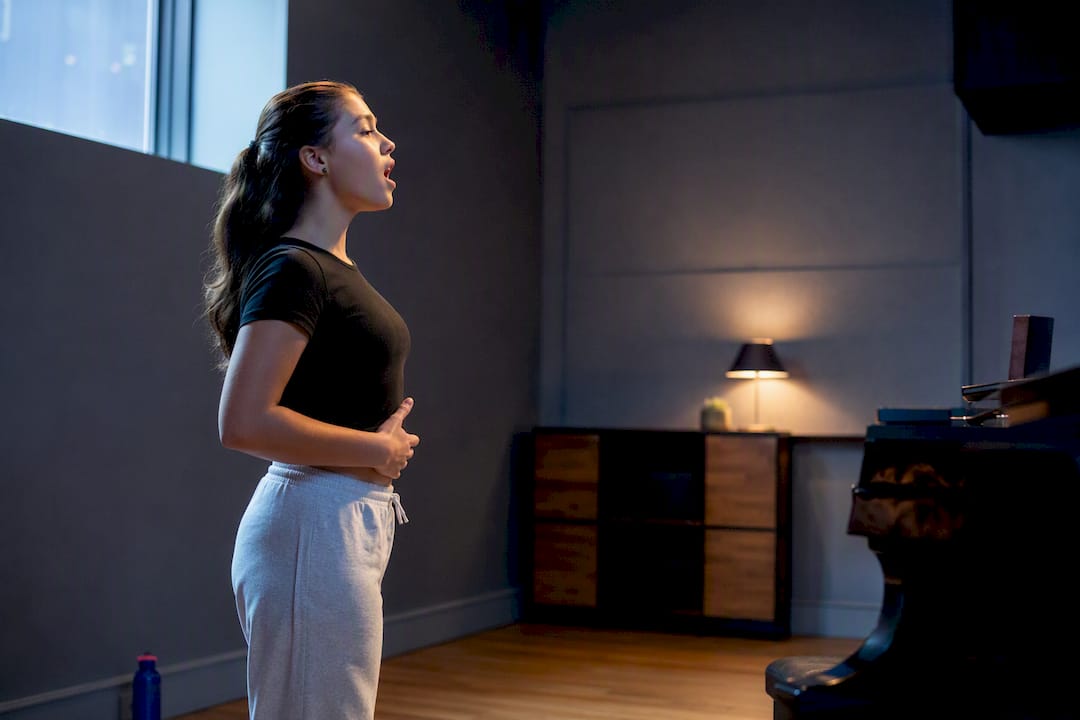
The posture that frees your voice is simple: a tall spine, soft knees, a neutral pelvis, open ribs, relaxed shoulders, and a head balanced lightly over the spine, not thrown back or dropped forward. Get that alignment right and two things happen almost immediately: your breath support deepens, and your resonance opens up, giving you a clearer, freer sound with far less strain.
TL;DR:
Proper singing posture requires a tall spine, relaxed shoulders, unlocked knees, and a neutral pelvis to deepen breath support and improve resonance.
Common faults like slumping or jutting the chin can be fixed quickly through simple adjustments like lifting the sternum or easing the head back against a wall.
Daily routines including wall checks, pelvic tilts, and gentle mobility exercises help establish automatic good posture for sustained vocal health.
Sitting on the front half of a chair with feet flat supports ribcage expansion, but standing remains preferable for maximum breath control and stage presence.
Movement and stage action demand rehearsing posture with choreography, using core stability as a foundation to maintain vocal support during performance.
Table of Contents
What good posture for singers actually looks like
Alignment starts at the feet and travels up, and every checkpoint matters more than it looks on paper. This is a working checklist used with singers at various stages of their vocal training.
Feet: hip width apart, weight spread evenly across both, with one foot very slightly forward if that feels more stable.
Knees: soft, never locked. You should feel a slight spring in the legs, as though you could move at any moment.
Pelvis: neutral. Avoid tucking under (which flattens the lower back) or thrusting forward (which arches it).
Ribcage: lifted and open, but not puffed like a soldier on parade. Let the ribs expand sideways as well as forward when you breathe.
Shoulders and neck: shoulders drop away from the ears and stay loose; the head balances on top of the spine rather than jutting forward or tilting back.
A quick wall check confirms it fast. Stand with your heels, seat, and shoulder blades lightly touching a wall, then step away while keeping that same length and openness. Do this in front of a mirror too, checking side-on for the classic warning sign, a forward-poking chin, which almost always means the neck has crept out of line.
This isn’t a pose to hold rigidly for an entire performance. A comparative pedagogical thesis on singing alignment found that most voice teachers agree on these fundamentals, gentle spinal elongation, open chest, relaxed shoulders, unlocked knees, but stress that good alignment has to stay dynamic rather than frozen. Think of it as a home base you return to, not a statue you become.
Why posture matters for breath, resonance and vocal health
Posture governs how much your diaphragm can actually move, and the diaphragm is where breath support begins. When the ribcage is lifted and free rather than collapsed, it can expand more fully in all directions as you inhale, giving the diaphragm room to descend and giving your breath more capacity to work with. Clinical guidance on diaphragmatic breathing treats posture as central to breath mechanics for exactly this reason: a compressed ribcage restricts the very muscle that powers a sustained phrase.
Head and neck position matter just as much, though for a different reason. When the chin juts forward or the head tips back, the muscles around the larynx tighten to compensate for the imbalance, and that extra tension often raises the larynx itself, thinning the tone and adding effort to notes that should feel easy. Teachers have noticed this becoming more common since prolonged screen time became a daily habit, with the National Association of Teachers of Singing reporting rising head and neck tension linked to hours spent looking down at phones and laptops, tension that shows up as a muffled or strained sound the moment a singer opens their mouth.
The payoff of getting this right is audible, not theoretical. Phrases last longer before you run out of air. Resonance feels brighter and more forward rather than stuck in the throat. Your voice tires less across a long rehearsal or a two-act show. If you notice yourself gasping mid-phrase or your throat aching after twenty minutes of singing, posture is usually the first place to look, well before you assume it’s a breath-support problem alone.
Common posture faults and how to fix them fast
Most posture problems fall into a handful of repeating patterns, and each one has a quick correction you can apply mid-rehearsal.
The slump. A collapsed chest and rounded upper back compress the ribcage and choke off breath capacity. Fix it by softly lifting the sternum, not yanking it up, just enough to open the chest, then hold a 30-second wall lengthening stretch to reset the habit.
The soldier stance. Overcorrecting into a rigid, chest-out, shoulders-back pose creates as much tension as slumping does, just in the opposite direction. Release the breath, soften the spine slightly, and keep the height without the stiffness.
Head jut. The chin pokes forward, shortening the back of the neck and adding strain to the larynx. Imagine a string gently lifting from the crown of your head, or do a wall face check, standing with your back to the wall and easing your head back until it lightly touches.
Locked knees and swayback. Locked knees push the pelvis forward and arch the lower back, disrupting the whole chain of alignment above it. A small pelvic tilt combined with softening the knees restores mobility through the hips and spine.
Tension hotspots. Jaw, tongue, and shoulders hoard stress even when the rest of the body looks aligned. Run a three-point check before you sing: gently wiggle the jaw open and closed, let the tongue rest low and relaxed, and roll the shoulders back and down.
None of these fixes take more than thirty seconds, which is exactly why they work in the middle of a rehearsal, not just in a mirror at home.
A daily warm-up routine to build alignment into your technique
Posture only becomes useful once it’s automatic, and that takes repetition, not a single good stretch before a show. This routine takes under ten minutes and folds alignment directly into your breath and phonation work rather than treating it as a separate task.
Set up (2 to 3 minutes). Stand against a wall for a lift check, then do five slow pelvic tilts to find neutral, followed by gentle spinal undulations, rolling down through the spine and back up one vertebra at a time, to release tension before you sing a note.
Breathe with alignment. Place your hands on your lower ribs and take five slow breaths, feeling the ribs expand sideways as well as forward. Then sustain an easy vowel, such as “ah” or “oo”, for as long as feels comfortable, checking that your shoulders stay still while the ribs do the work.
Mobility and strength. Roll the neck gently through its full range, drop and circle the shoulders a few times, and switch on your core with a light brace, as though preparing for a gentle push, not a crunch. A short balance drill, standing on one foot for ten seconds each side, sharpens the same stability that keeps posture steady onstage.
Progress steadily. Ten minutes daily beats forty minutes once a week. Layer this routine underneath your usual vocalises rather than replacing them, so alignment becomes the foundation every exercise sits on top of.
Singers who treat their bodies with the same discipline as athletes tend to see this pay off fastest, since regular mobility and core work supports both breath control and stamina over a long rehearsal season, not just a single warm-up.
Pro Tip: Film fifteen seconds of yourself singing a simple phrase each day, from the side, and compare the clips weekly. Small drifts, a creeping chin, rounding shoulders, are much easier to spot on video than they are to feel in the moment.
Singing while seated: treat the chair as equipment
Sitting doesn’t have to mean sacrificing your alignment, but it does mean sitting differently to how you would relax on a sofa. A chair, for a singer, is a tool, not a place to switch off.
Sit on the front half of the seat rather than sinking into the backrest, which lets the spine lengthen naturally.
Keep both feet flat on the floor, roughly hip-width apart, mirroring the stability you’d have standing.
Lengthen through the spine and keep the ribs free to expand. Sitting on the front half of the chair with feet flat is exactly what clinical breathing guidance recommends for keeping the ribcage unrestricted during diaphragmatic breathing.
Favour standing for warm-ups whenever you can. Many voice teachers suggest spending most of their practice time on their feet, since standing gives the ribcage and pelvis more freedom to move than sitting ever will.
If you’re sharing a stage with accompanists, instrumentalists, or props that force you into a seated position, rehearse that exact seated posture in advance rather than discovering the compromises live.
Self-checks before you step on stage
Nerves collapse posture faster than almost anything else, which is why a fast pre-performance reset matters as much as the daily routine.
Run a quick mirror or wall check: heels, seat, and shoulder blades lightly against the wall, then step forward keeping that same length.
Do a three-second scan of jaw, tongue, and shoulders, releasing any tightness you find.
If you have footage from a rehearsal, watch for a creeping chin or rounding shoulders, the two faults that reappear most under pressure.
A partner or fellow cast member can call these out from the wings faster than you can spot them yourself.
In the last thirty seconds before you go on, run through the full chain fast: feet, knees, pelvis, ribs, shoulders, head. It takes less time than a deep breath.
What the evidence actually shows about posture and singing
Pedagogy and research agree on the basics but diverge on the details, and that gap is worth understanding rather than glossing over. Teachers broadly converge on gentle spinal elongation, open chest, relaxed shoulders, and unlocked knees as the pedagogical consensus for healthy alignment. But when researchers have actually measured the effects in a lab, the results are messier than the consensus suggests.
A pilot sEMG study comparing four standard postures, upright, modified upright, a Tower of Pisa style lean, and upright on an unstable surface, found no large, consistent differences in aerodynamic measures or loudness among experienced singers. Pitch stability did shift on the unstable surface, but otherwise the postures performed similarly on the metrics tested. That’s a useful reality check: posture is not a magic lever that transforms every vocal metric overnight, and singers shouldn’t panic over minor postural variation.
Separately, cephalometric research on trained opera singers found that the upper cervical spine changes shape during singing, with forward inclination of the upper vertebrae linked to a larger airway space during phonation. That points to mobility, not rigidity, as the goal for the neck specifically. The practical takeaway across both studies is the same: use posture cues as one tool among several, adjust them to the individual singer, and judge success by sound and effort rather than by forcing a textbook stance.
How posture needs change across singing styles
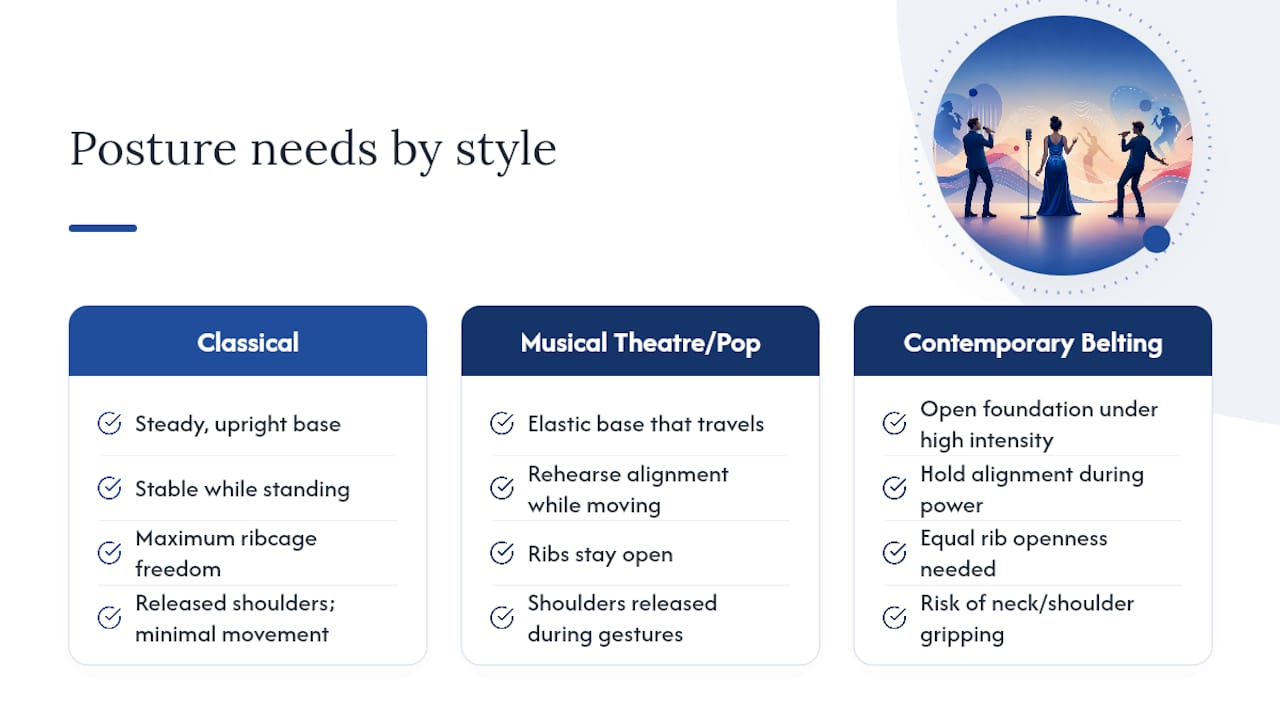
A classical singer holding a concert stance and a musical theatre performer belting through a dance break need different things from their alignment, even though the underlying principles stay constant. Opera and classical singing tend to favour a steadier, more upright base, since long sustained phrases and wide dynamic range reward maximum ribcage freedom and minimal extraneous movement. That cephalometric research on cervical mobility in opera singers reflects exactly this demand, a stable but never locked frame that keeps the airway open through demanding passages.
Musical theatre and pop performance ask for something more elastic. You might be singing while walking downstage, gesturing, or reacting to a scene partner, so the posture has to travel with you rather than anchor you in place. The core principles don’t change, ribs stay open, shoulders stay released, the head stays balanced, but singers in these styles need to rehearse holding that alignment through movement, not just while standing still.
Contemporary commercial music and belting add another layer, since higher-intensity vocal production often tempts singers into gripping through the neck and shoulders to generate power. This is precisely where the “gentle length, not rigid rigidity” principle becomes essential. A singer belting a big chorus needs just as much openness through the ribs as an opera singer holding a pianissimo, even though the sound and energy on top of that foundation are completely different.
Posture on the move: dancing, blocking and stage presence
Choreography is where posture theory meets reality, and reality usually wins unless you’ve rehearsed for it specifically. The alignment you find standing still in a mirror has to survive turns, lifts, quick blocking changes, and the adrenaline of a live audience, and that only happens through repetition under those exact conditions.
Rehearse difficult vocal phrases while walking through the actual blocking, not just standing at a music stand. If a lyric lands on a spin or a step, you need to know in advance whether your breath support holds up through that movement, and the only way to find out is to test it early rather than discovering the gap on opening night.
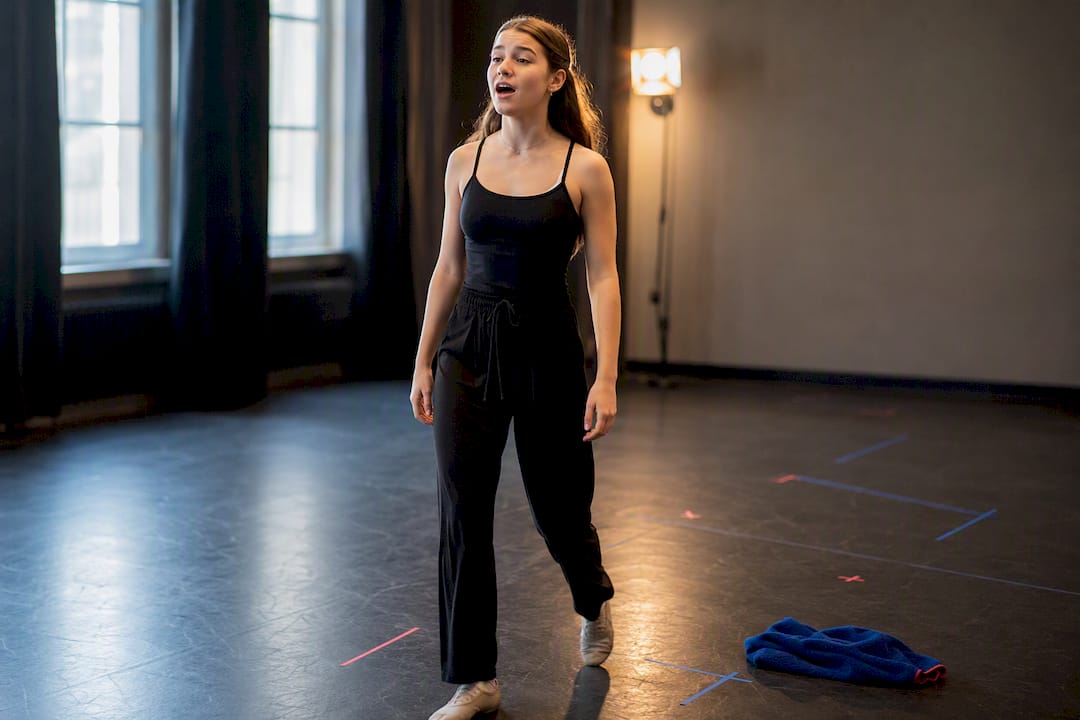
Core engagement becomes your anchor during movement. A light brace through the midsection, the same one used in the daily warm-up routine, keeps the ribcage stable even as the arms, legs, and head are doing something else entirely. Think of your torso as the steady base that everything else moves around, rather than something that gets forgotten the moment choreography starts.
Stage presence and posture reinforce each other more than most performers realise. A singer who holds gentle length through the spine reads as confident and grounded from the back of an auditorium, even in a still moment between lines. Collapsing under nerves does the opposite, shrinking a performer’s presence exactly when a scene calls for them to fill the space.
Notes from the rehearsal room
Working with teenagers on posture has taught us that short, physical cues beat long explanations every time. Telling a fourteen-year-old to “engage their core” rarely lands, but asking them to imagine a string gently lifting from the crown of the head does, almost instantly.
These cues are often built directly into ensemble warm-ups rather than treated as a separate lesson. A two-minute wall check and pelvic tilt sequence before vocal work can produce visibly freer sound within a single session, longer phrases, less strain on the higher notes, and noticeably more relaxed shoulders by the end of rehearsal.
— Andrew
Where to build these habits with proper guidance
Reading about alignment helps, but nothing replaces regular, guided practice with someone watching your posture in real time and catching the small drifts you can’t feel yourself. That’s the gap Ocean Theatre Company fills for young performers aged 14 to 19 in Berkshire, weekly rehearsal time with professional direction, built around two full-scale musical productions a year rather than a one-off workshop.
[

Posture work happens inside the ensemble training itself, folded into vocal warm-ups, blocking rehearsals, and the everyday discipline of preparing a full production, so young singers build the habit under the same pressure they’ll face on opening night. You can see how that training translates into a finished show on our past productions page, and if you’re ready to find out whether a place suits your teenager, the booking information page has everything you need to enquire or reserve a spot for the next term.
Sources
FAQ
Is vibrato learned or natural?
Vibrato tends to emerge naturally once tension is released from the throat, neck, and jaw, and good posture is one of the most reliable ways to reduce that tension. Some singers still benefit from targeted exercises to free up a vibrato that’s being suppressed by physical strain elsewhere in the body.
Do singers sing better sitting or standing?
Most singers perform better standing, since it allows the ribcage and pelvis to move freely for breath support, and many teachers recommend spending most of their practice time on their feet. Sitting can still support excellent singing when the chair is used correctly, front half of the seat, feet flat, spine lengthened.
Should you sing from your throat or chest?
Neither the throat nor the chest should feel like the effort centre. Power should come from breath support driven by the diaphragm, with open ribs and a relaxed throat simply allowing that airflow to shape into sound without added tension.
What is the most difficult position to sing in?
Positions that compress the ribcage or force the neck out of alignment, such as slumping, singing while bent forward, or holding a rigid soldier-style stance, make singing hardest. Any position that restricts diaphragmatic breathing or adds tension around the larynx works directly against the breath support and resonance a singer needs.
Comments